The approval did not travel with the name
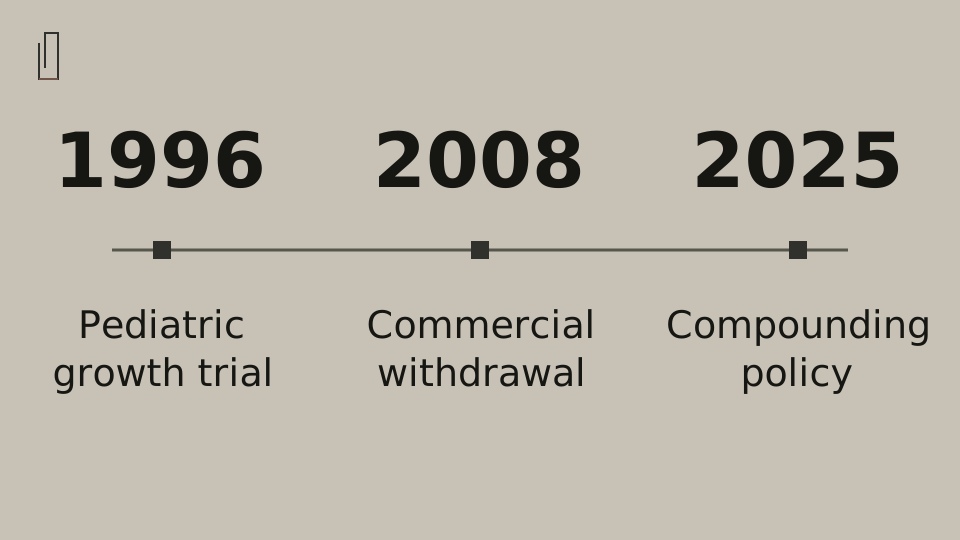
The pediatric record, the commercial withdrawal, and the compounded preparation each have their own place.
The original job had a measurable result
The early Sermorelin record concerns children with growth hormone deficiency. In the multicenter pediatric trial, first-year height velocity rose from about 4.1 cm/year to roughly 7-8 cm/year without excessive IGF-1 generation. Those children grew faster.
I give that result its due. It is more substantial than the impression that Sermorelin has only ever been a wellness trend. The review of diagnosis and treatment in children also describes the stimulation test: using the peptide to ask how much growth hormone the pituitary can release. Testing a gland and treating deficient growth were distinct uses of the same signal.

A commercial exit, not a failed safety verdict
The original approved product was withdrawn from the U.S. market in 2008 for commercial reasons, not because of a safety or efficacy failure. The clinical review published afterward discussed the lack of commercially available GHRH and alternative tests for adult growth hormone deficiency.
I expected a medical verdict behind the disappearance. Instead, the research record describes a commercial withdrawal that left clinicians with a diagnostic problem. Neither “withdrawn” nor “formerly approved” carries the whole explanation on its own.
The old approval covered the pediatric indication. It did not establish adult anti-aging, fat-loss, or muscle-building use. A contemporaneous editorial on secretagogues and aging was explicitly skeptical of that larger assignment.
Category 1 is a compounding category
Under FDA's interim compounding policy, Sermorelin is treated as a long-standing Category 1 bulk drug substance while evaluation continues. The policy describes FDA's enforcement approach to compounding with nominated substances. The resulting compounded medicine has no FDA approval under that policy.
Current compounded Sermorelin requires an individual prescribing decision. That is a different arrangement from the former approved product, and broad claims about adult wellness are a different question again. I resist compressing all of them into a single word such as “legal” or “approved”; that compression is where the interesting distinctions disappear.
The study amounts and safety record address the next questions. A permission to prepare something, evidence that it changes a hormone, and evidence that it helps a particular adult are separate matters.